In the CSA this Week:
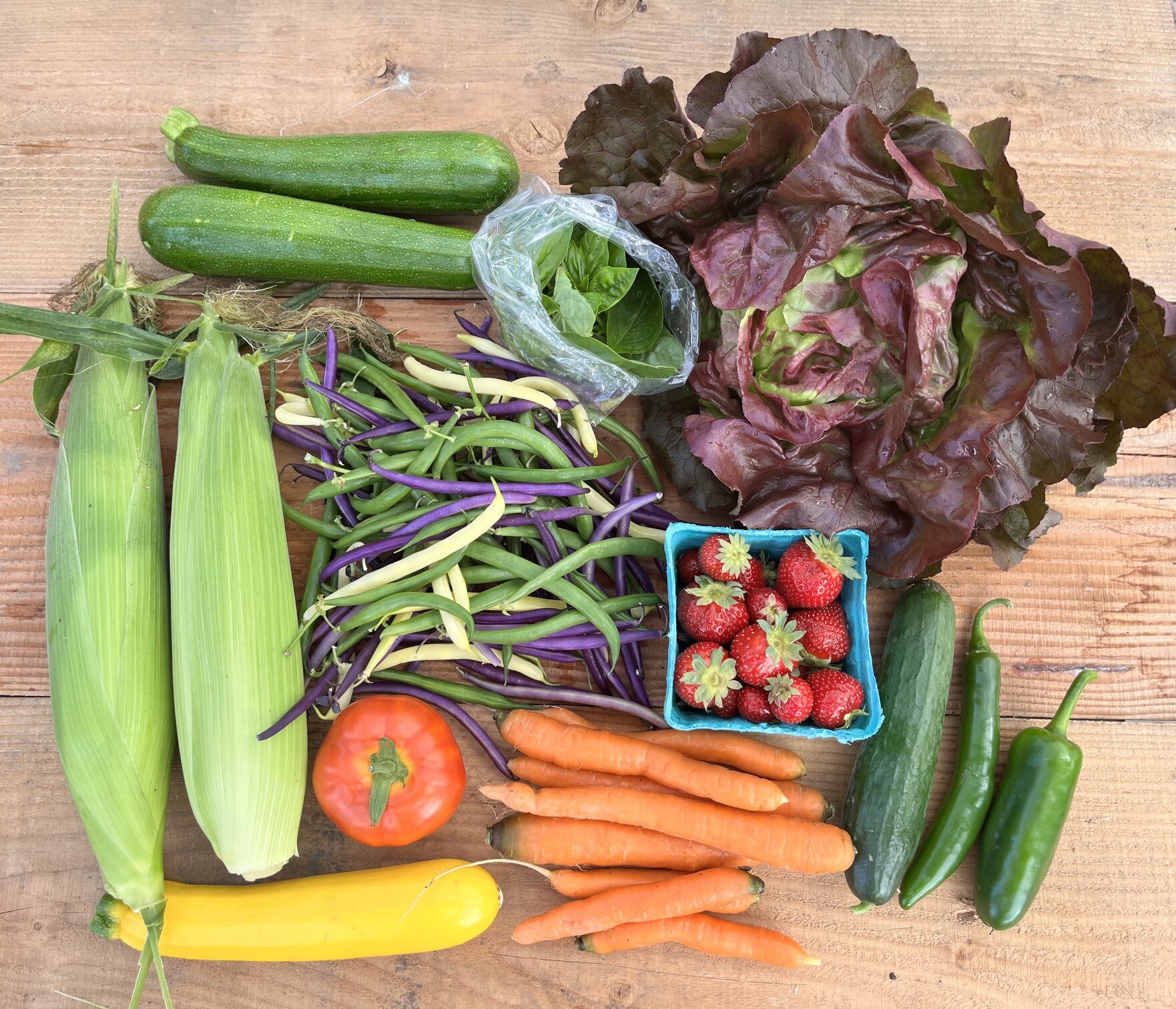
- Strawberries
- Head Lettuce
- Carrots
- Tomatoes
- Zucchini
- Basil
- Green-purple-yellow Beans
- Hot Peppers - Jalapeno & Serrano
- Cucumbers
On Rotation:
- Eggplant
- Sweet Corn
Perseverance
This has been a grateful week of perseverance paying off on the farm, in two crops in particular: cucumbers and onions. Back in July we broke the bad news that we were having a total crop failure in our Persian cucumbers in one of our two greehouses. After a month of waiting, we finally got our patholgy results back from the OSU plant lab and the diagnosis was not good: Verticillium. Verticillium is a soil borne fungal pathogen that causes vascular wilt and plant death and once introduced can persist for up to 14 years in the soil. Definitely not good news for our indoor cucumber production on the farm, now or for the next decade! We don't know where it came from or how it infected that greenhouse - possibly seed-borne or through potting soil. Starting last week, though, Persian cucumbers began to show up in your CSA totes again. That's because we planted a new wave of cukes in July in different locations on the farm and they're now beginning to yield a late season wave of lovely little cukes for you.
Meanwhile we're doing what we can organically to remediate the soil in the infected greenhouse via a natural biofumigation treatment. We're growing a dense crop of mustard greens that will get chopped up and incorporated into the soil when it starts flowering in a few weeks. As the mustards break down they release compounds that act as a natural pesticide. We'll tarp the ground immediately after incorporating the mustards to trap the off-gasing compounds and enhance the biofumigant effect. Some studies show up to a 70% reduction in fungal pathogens after biofumigation with mustards. We're also exploring the possibility of grafting our Persian cucumbers onto verticillium-resistant rootstock next year, which would be a huge investment in labor but potentially worth the effort for the reward of abundant, beautiful cucumbers. You know that hefty winter squash we always give you late in the fall, Tetsukabuto? Well, it's only recently that it started being grown for it's delicious, long-storing squash fruit. It's better known as a disease-resistant rootstock for fragile melons and cucumbers that lack disease resistance. Another point for the rugged Tetsu!
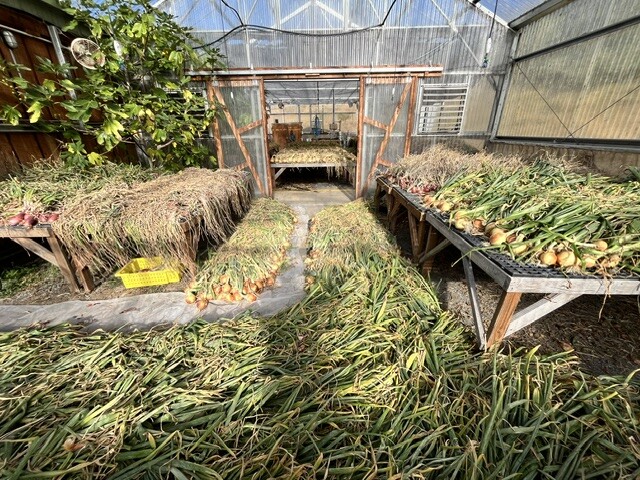
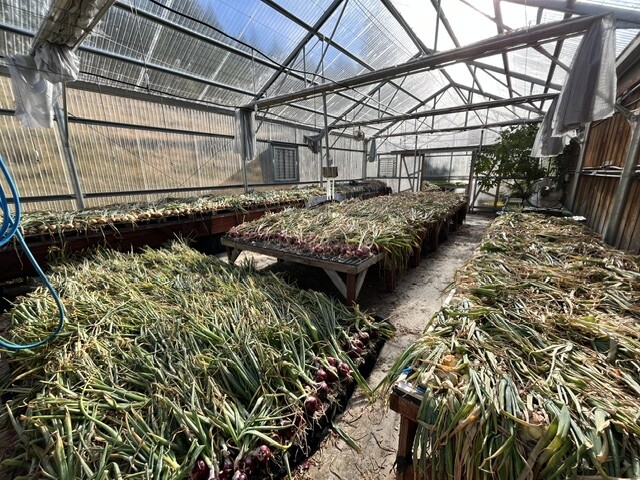
As for onions, we've had two disappointing years in a row, in 2024 and 2025, when we lost a huge percentage of our storage onion crop to disease and root rot. Both years we had unusual August rains right before harvest, which led to widespread fungal and bacterial disease in the fully formed bulbs. Most people think of onions as a basic everyday commodity that should be cheap. But onions are one of our most expensive crops to produce because of the extensive labor that goes into them. They're the first thing we seed in the propagation house in early February; they occupy a big footprint (and require a lot of babying) in our greenhouse for 10+ weeks; they take our crew a solid week to hand transplant (one bare-root transplant at a time, pushed in every 4 inches, three rows to a bed, 220' long beds, 8 beds in total = 16,000 onions/shallots); they have to be painstakingly hand-weeded multiple times throughout the spring and early summer because onions don't compete with weed pressure very well; then a big push in August to pull and haul them out of the field (please, no rain!); a month of curing in our greenhouse to dry down (please, no rot!); and finally, countless hours of cleaning, trimming and sorting before they go into storage for the fall/winter. Losing this crop at the final stage is a big bummer and it's happened two years in a row.
This year, feeling only lukewarm about our hopes for an onion crop, we switched to a couple varieties that are more disease resistant and we went through all the motions, fully braced for failure. We actually had setbacks right out the gate when a significant percentage of our newly-germinated seedlings succumbed to white fly in the greenhouse (yet another unfortunate side effect of our weirdly warm winter), and mice (who were relishing our cozy heat table and digging up the newly-germinated seedlings). We reseeded twice and set a bunch of mouse traps. Because onions are slow-growing, the seedlings went into the ground later than usual and smaller than I'd like - neither of which help our cause when the goal is to size up an onion bulb by August and get it out of the field while our summer weather pattern is usually warm and dry.
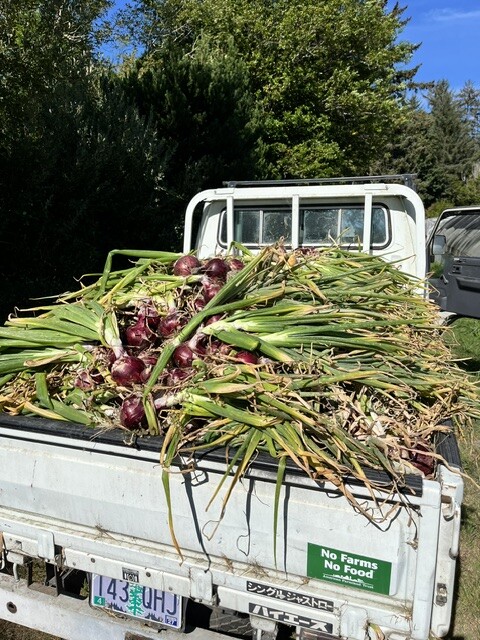
Well, I'm happy to say that as of Monday we got all of the onions into the greenhouse for curing, without any capricious August rain, and I'm feeling cautiously optimistic. I don't want to jinx anything by jumping for joy yet, but right now the future is looking decidely onion-rific. Moral of the cucumber and onion story: try, try again. Learn from the loss. Adapt. Keep innovating. And also know that failure will happen, but the diversity of this farm somehow manages to keep those CSA totes full and colorful in spite of it all.